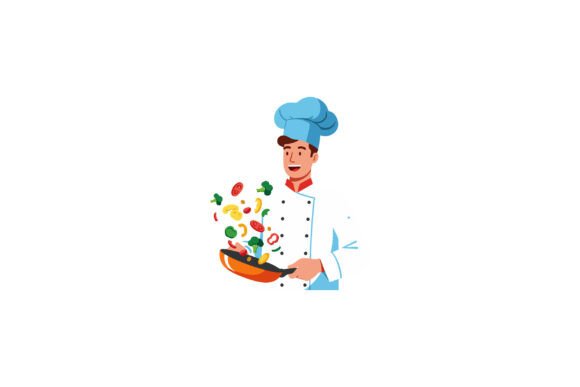
The Energetic Appeal of the Chef Cooking Colorful Vegetables Illustration
More Than Just a Stock Image: Capturing Culinary Energy
When you first look at the Chef Cooking Colorful Vegetables in Skillet illustration, you don't just see a static image; you feel the heat of the kitchen. This isn't a sterile, corporate graphic. Instead, it’s a dynamic visual asset that captures a specific, vibrant moment: the energetic toss of fresh produce in a hot pan. As a designer or brand owner, you know that static imagery often fails to stop the scroll. This illustration, however, is defined by its motion. The vegetables—likely peppers, zucchini, carrots, and greens—are caught mid-air, creating a sense of action and immediacy.
The personality of this graphic is undeniably fresh and lively. It balances a professional artistic style with a sense of whimsy. It feels authentic, like a snapshot from a high-end cooking show or a trendy food blog. For those of us working in branding, this distinction matters. We are constantly looking for design assets that convey "freshness" without looking artificial. The illustration succeeds because it embraces the imperfection of cooking—the scatter of ingredients, the implied sizzle of the skillet—making it relatable to a wide audience, from the home cook to the professional chef.
Visual Style and Typography Pairings
While the graphic itself is the star, its utility depends heavily on how it integrates with your typography. The illustration uses bright, saturated colors and distinct outlines, giving it a modern, slightly illustrative quality. This style pairs exceptionally well with clean, modern typography. If you are building a brand identity for a meal kit service, a farm-to-table restaurant, or a health food blog, you need typefaces that can stand up to the visual weight of the illustration without competing with it.
Consider using a sans serif font for your headlines. A geometric sans serif will mirror the roundness of the vegetables and the skillet, creating visual harmony. Alternatively, a bold script font could work for a logo design if you want to emphasize the "homemade" or "artisanal" aspect of the brand. However, be cautious with handwritten fonts or overly ornate serif fonts; they might clash with the illustration's energetic lines, making the overall layout feel chaotic. The goal is to let the illustration provide the energy while your typography provides the structure and readability. This is where understanding font pairing becomes essential—you want a hierarchy that guides the eye from the vibrant image to your call to action.
Strategic Applications for Designers and Entrepreneurs
The versatility of the Chef Cooking Colorful Vegetables in Skillet illustration extends across numerous formats, thanks to the included file types (SVG, EPS, JPG, PNG). This is where the asset becomes a practical tool rather than just a pretty picture.
Packaging and Print Design
For those in packaging design, the vector files (SVG and EPS) are invaluable. You can scale this illustration to fit a tiny spice jar label or a large cardboard box for a meal delivery service without losing quality. Imagine this graphic on the side of a frozen vegetable bag; it immediately communicates that the contents are vibrant and appetizing, not dull and processed. In editorial design, such as a cookbook or a lifestyle magazine, the illustration breaks up large blocks of text, adding a splash of color that draws the reader into the recipe section.
Digital Presence and Social Media
In the digital realm, this asset shines for social media graphics. The PNG files with transparent backgrounds allow you to overlay the chef and the flying vegetables onto solid color blocks or lifestyle photos. This is perfect for Instagram Stories or Reels covers where you need to grab attention instantly. For web design, the illustration can serve as a hero image for a landing page, instantly establishing the site's topic and mood. It tells the visitor, "We are about fresh, exciting food," faster than a paragraph of copy ever could. It’s a practical example of how a single high-quality image can anchor an entire brand identity.
Practical Guidance for Implementation
When you download the Chef Cooking Colorful Vegetables in Skillet ZIP file, you are getting a toolkit. To get the most out of it, you need to evaluate the context of your project.
First, assess the color palette. The illustration uses specific brights. If your brand uses muted, pastel tones, you may need to adjust the illustration's colors (if the license permits) or choose a background that bridges the gap between your brand's palette and the illustration's vibrancy. Second, consider the complexity. Because the illustration has a lot of movement and detail, it works best against a clean background. Avoid placing it over busy textures or complex photography, as this will reduce its impact and muddy the visual hierarchy.
Finally, think about the medium. If you are using the JPG for print, ensure your resolution is high enough (300 DPI is standard). If you are using the SVG for web, ensure your CSS is handling the scaling correctly so the image remains sharp on retina displays. This asset is a premium resource, and treating it with professional standards will yield professional results. Whether you are a crafter making party invitations or a small business owner designing a menu, this illustration provides the visual shorthand for delicious, healthy, and exciting food.